
Beyond Surface Glow: How Facial Exfoliation in Beecroft Can Influence Texture, Congestion and Skin Clarity
October 18, 2026Microneedling in Carlingford: What Happens Beneath the Skin During the Remodeling Process
October 18, 2026The Overlooked Back: Why Persistent Body Acne Can Require a Different Treatment Approach in Carlingford
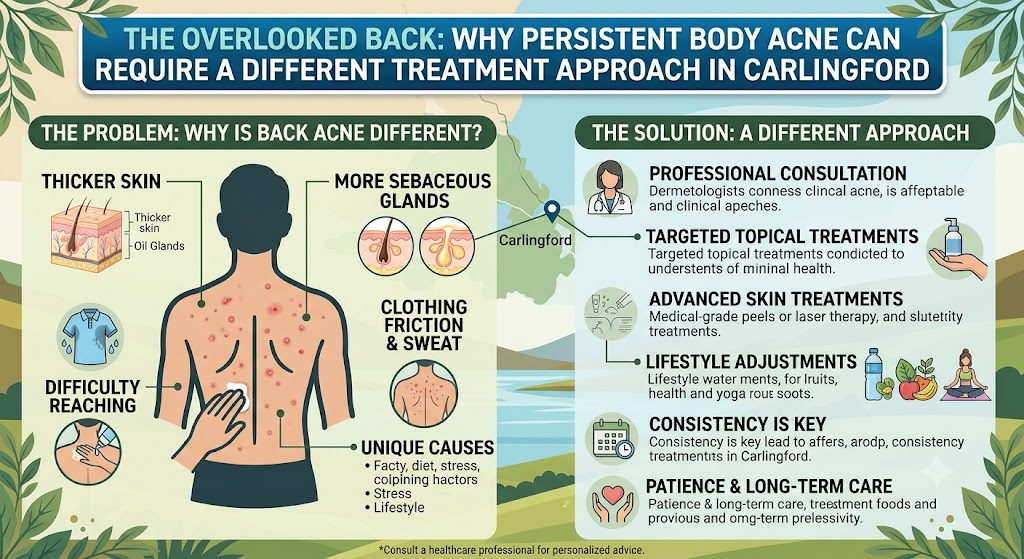
Persistent body acne can be frustrating, particularly when it develops across the back and remains difficult to control with the same products used for facial breakouts. Back acne, often called “bacne,” can involve clogged pores, inflammation, blackheads, whiteheads, and deeper lesions that may become painful or leave lasting marks. Because the skin on the back differs from facial skin in several important ways, simply extending a facial skincare routine to the body may not always produce the desired results. Sweat, friction, clothing, hair products, and difficulty reaching the area can all contribute to ongoing breakouts. In Carlingford, people dealing with persistent body acne may benefit from an approach that considers the underlying causes rather than focusing only on individual spots. At Armitage Skin, we take a comprehensive approach to understanding why acne continues to appear and what type of treatment strategy may be appropriate for the skin.
Why Back Acne Is Different From Facial Acne
Although acne on the back develops through many of the same biological processes as facial acne, the environment surrounding the skin can be very different. The back contains numerous sebaceous glands that produce sebum, which can combine with dead skin cells and contribute to blocked follicles. The area is also frequently exposed to perspiration, particularly during exercise, warm weather, or physically demanding activities. Unlike the face, the back is often covered by clothing for long periods, which can trap heat and moisture against the skin. These factors can create conditions where congestion and inflammation persist even when someone follows a consistent facial skincare routine. This is one reason persistent body acne may require a more targeted treatment plan rather than simply using the same products on every part of the body.
The Role of Sweat and Everyday Friction
Everyday habits can have a significant influence on breakouts across the back, especially when sweat and friction repeatedly affect the same areas. Tight clothing, sportswear, backpacks, and other items that press against the skin can create mechanical irritation and contribute to what is sometimes described as acne mechanica. Sweat itself is not necessarily the direct cause of acne, but leaving sweat and occlusive products on the skin for extended periods can create an environment that encourages congestion. Exercise can therefore be beneficial for overall wellbeing while still requiring thoughtful post-workout skincare. Showering after significant sweating, changing out of damp clothing, and choosing breathable fabrics may help reduce unnecessary irritation. When persistent acne continues despite these practical measures, professional assessment can help determine whether additional factors are contributing to the problem.
Why Reaching the Back Can Be a Treatment Challenge
One of the most overlooked aspects of back acne is simply the difficulty of caring for the affected skin consistently. The back is difficult to see clearly, making it harder to identify whether the skin is becoming more congested, inflamed, dry, or irritated. It can also be challenging to apply skincare products evenly across the entire affected area without assistance. People may therefore treat the most obvious spots while missing smaller areas of congestion that continue to develop into new breakouts. Inconsistent application can make it appear that a particular treatment is ineffective when the real issue may be coverage or routine adherence. A professional consultation can provide a clearer assessment of the distribution and severity of the acne and help establish a practical treatment strategy.
When Persistent Acne Needs More Than Basic Skincare
Occasional body blemishes may respond to simple changes in cleansing and skincare, but persistent or widespread acne can be more complicated. Repeated inflammation may indicate that the follicles are continually becoming blocked or that several contributing factors are present at the same time. Deeper lesions can also take longer to resolve and may increase the risk of post-inflammatory marks or scarring. Continuing to experiment with increasingly strong over-the-counter products can sometimes make the skin excessively dry or irritated without addressing the underlying problem. The right approach depends on the type of lesions present, their severity, how long they have been occurring, and how the skin has responded to previous treatments. At our clinic, we assess these factors before recommending a strategy so that treatment is based on the condition of the skin rather than a one-size-fits-all assumption.
Understanding the Different Types of Back Breakouts
Not every bump on the back is necessarily conventional acne, which is an important consideration when persistent breakouts do not respond as expected. Acne can include comedones, inflamed papules, pustules, and deeper nodules, with different presentations requiring different levels of management. Some conditions involving the hair follicles can also resemble acne, including folliculitis, which may have different triggers and treatment considerations. Sweat, occlusive skincare products, friction, and microorganisms can all play roles in follicular eruptions. This makes an accurate assessment particularly valuable when a person has tried several approaches without meaningful improvement. Identifying what is actually causing the bumps can prevent unnecessary treatment and help guide a more suitable skincare plan.
How Hair and Body Products Can Affect Back Acne
Products used on the hair can sometimes become an overlooked source of congestion on the back. Conditioners, styling creams, oils, leave-in treatments, and other products can come into contact with the skin while showering or throughout the day. If these products contain ingredients that are highly occlusive for an individual’s skin, they may contribute to blocked follicles in susceptible areas. Body lotions, sunscreens, and other skincare products can also influence congestion depending on their formulation and how they interact with the person’s skin. This does not mean that every rich product causes acne, because individual responses vary considerably. Reviewing the products that regularly contact the back can nevertheless be a useful part of understanding why persistent body acne continues.
The Importance of Considering Post-Acne Marks
Treating active acne is only one part of managing persistent body breakouts because inflammation can leave visible changes even after individual lesions have disappeared. Post-inflammatory hyperpigmentation can develop after acne and may be particularly noticeable when there is repeated inflammation across a large area. Some people may also develop textural changes or permanent acne scars following deeper lesions. Picking, squeezing, or repeatedly scratching breakouts can increase the likelihood of prolonged marks and scarring. This is why an effective treatment approach should consider both current breakouts and the potential long-term effects of ongoing inflammation. Addressing acne earlier and reducing repeated inflammation can be an important part of maintaining healthier-looking skin over time.
Why Treatment Should Be Tailored to Your Skin
There is no universal body acne routine that works equally well for everyone. Skin type, acne severity, sensitivity, lifestyle, previous treatments, and the presence of pigmentation or scarring can all influence the appropriate approach. Someone with predominantly clogged pores may have different needs from someone experiencing frequent inflammatory or deeper lesions. Likewise, a person whose acne is strongly associated with exercise and friction may need different practical adjustments from someone whose breakouts appear unrelated to those factors. Our approach focuses on understanding these differences before deciding how the skin should be managed. Personalisation can make treatment more practical while also helping reduce the risk of unnecessary irritation from unsuitable products or excessive treatment.
Professional Assessment Can Change the Treatment Strategy
When acne continues for months or repeatedly returns despite consistent skincare, professional assessment can provide valuable insight. A skin professional can examine the distribution, type, and severity of the lesions and consider factors that may not be obvious when looking at the skin independently. The assessment can also help distinguish acne from conditions that may appear similar but require different management. Depending on the presentation, treatment may involve professional skincare, prescription options, procedures, or a combination of approaches under appropriate clinical guidance. The goal is not simply to dry out every blemish but to address the processes contributing to recurring inflammation and congestion. For people in Carlingford who have been repeatedly treating their back without achieving lasting improvement, a more structured assessment may be a worthwhile next step.
Creating a Sustainable Back Acne Routine
A successful approach to body acne should be realistic enough to maintain over time because consistency is often more important than constantly changing products. Gentle cleansing, appropriate shower habits, suitable clothing, and avoiding unnecessary friction can form part of a supportive routine. Treatments should be introduced according to the skin’s needs rather than layering multiple active ingredients together in an attempt to accelerate results. Excessive scrubbing can damage the skin barrier and potentially worsen irritation, so more aggressive does not necessarily mean more effective. It is also important to give an appropriate treatment strategy enough time to work because acne generally does not disappear overnight. With professional guidance and a consistent routine, the focus can shift from reacting to individual breakouts toward managing the factors that contribute to recurring acne.
Taking Persistent Body Acne Seriously
Back acne is sometimes dismissed as a minor cosmetic concern, but persistent inflammation can affect confidence, comfort, clothing choices, and willingness to participate in activities where the back is visible. It can also become increasingly difficult to manage when repeated breakouts lead to pigmentation or scarring. Recognising persistent body acne as a condition that may require a different approach can help people move beyond trial-and-error skincare. Instead of treating every blemish independently, it is useful to consider the skin environment, lifestyle factors, product exposure, acne type, and long-term consequences. For those seeking professional skin care in Carlingford, a tailored assessment can help establish a clearer direction. At Armitage Skin, we believe that understanding the reason behind persistent acne is an important foundation for choosing an appropriate treatment approach.
Finding the Right Approach for Your Skin
Persistent back acne does not necessarily mean that skincare has failed or that clearer-looking skin is unattainable. It may simply indicate that the skin needs a more targeted strategy that accounts for the unique challenges of treating the back. Factors such as sweat, friction, product exposure, follicular congestion, inflammation, and post-acne pigmentation can all influence the way body acne behaves. Professional assessment can help identify which factors are relevant to an individual’s skin and determine whether a more comprehensive treatment plan is appropriate. If you are in Carlingford and ongoing body acne has become difficult to manage, seeking professional guidance can help you understand your options rather than continuing to change products without a clear direction. Armitage Skin can help you take a considered approach focused on understanding your skin and developing an appropriate path toward better long-term management.


