Skin Tightening in West Pennant Hills: Why Collagen Remodelling Is a Gradual Process Rather Than an Instant Result
September 13, 2026Chemical Peel Aftercare in North Epping: Why Post-Treatment Skin Protection Can Influence the Overall Experience
Understanding What Happens After a Chemical Peel
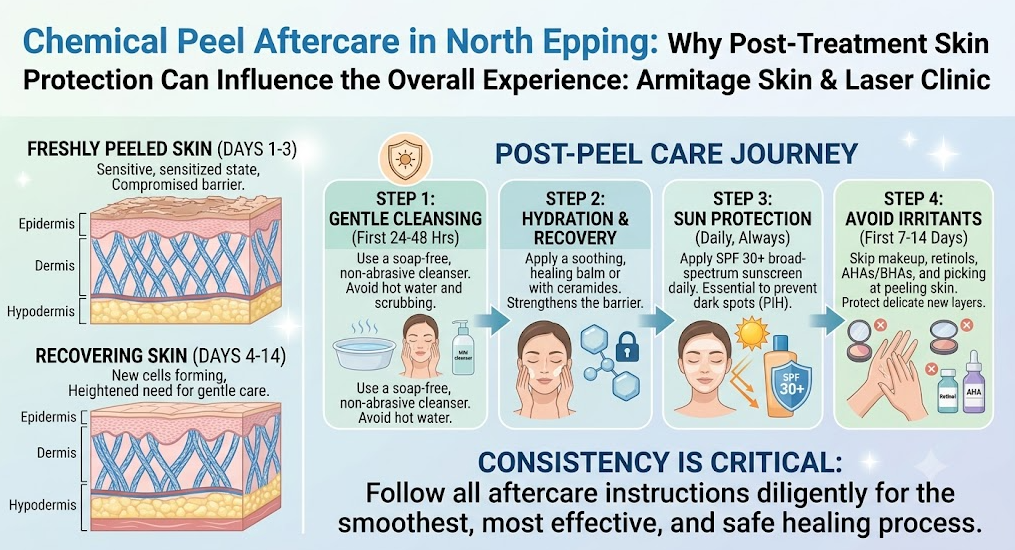
A chemical peel is a professional skin treatment designed to encourage the removal of damaged outer skin cells and reveal fresher looking skin underneath. While the treatment itself is an important part of the process, what happens after the appointment can also influence how the skin looks and feels during recovery. The skin may become more sensitive following treatment because the peeling process temporarily affects the outer protective layer. This means that everyday habits, skincare products, sun exposure, and environmental conditions can become more significant than usual. Appropriate aftercare helps create a supportive environment while the skin moves through its natural recovery process. At Armitage Skin, we believe understanding post-treatment skin protection is an important part of helping clients approach their chemical peel experience with realistic expectations.
Why Post-Treatment Skin Protection Matters
The skin barrier plays an important role in protecting the body from external environmental factors and helping maintain appropriate moisture levels. After a chemical peel, the treated area can temporarily feel more delicate, dry, tight, or sensitive depending on the type and strength of the peel used. Introducing unnecessary irritation during this period can make the recovery experience less comfortable. This is why post-treatment protection should not be viewed as an optional addition to the treatment itself. Instead, it should be considered part of the overall skincare process that begins when the appointment ends. Understanding this relationship can help clients make more informed decisions about how they care for their skin in the days that follow.
Following Professional Aftercare Guidance
Every chemical peel is different, which means aftercare should be based on the specific treatment performed and the condition of the individual skin. A superficial peel may have different recovery considerations from a stronger professional peel, so general advice found online may not always be appropriate. Your skin professional can explain what sensations and visible changes may be expected during your particular recovery period. They can also advise when to resume particular skincare products, treatments, or cosmetic procedures. Following these instructions can reduce unnecessary experimentation during a time when the skin may be more reactive than usual. At Armitage Skin, we consider clear aftercare guidance an important part of helping clients understand what to expect once they leave the treatment room.
Protecting Skin From Sun Exposure
Sun protection is one of the most important considerations following many types of chemical peel treatments. Newly treated skin can be more vulnerable to environmental exposure, making sensible protection particularly important during the recovery period. Spending extended periods in direct sunlight may increase discomfort and can work against the goal of maintaining an even looking complexion. Wearing suitable protective clothing, seeking shade, and following professional recommendations regarding sunscreen can help reduce unnecessary exposure. Clients should also remember that outdoor exposure can occur during ordinary activities such as walking, commuting, shopping, or sitting near windows. Maintaining sensible sun protection habits is therefore an important part of supporting the skin beyond the treatment appointment itself.
Choosing Skincare Products Carefully
Post-peel skin may respond differently to products that were previously tolerated without difficulty. Ingredients designed to exfoliate, stimulate, or provide intensive treatment may be unsuitable immediately after a peel unless specifically recommended by a qualified professional. Strong acids, retinoid products, scrubs, and other potentially irritating formulations should not automatically be returned to the routine simply because they were part of a previous skincare regimen. The timing for reintroducing these products can depend on the treatment performed and how the skin responds during recovery. Using fewer products for a period can sometimes make it easier to identify what the skin is tolerating comfortably. A carefully structured routine can therefore be more appropriate than attempting to accelerate results with multiple active ingredients.
The Importance of Gentle Cleansing
Cleansing remains an important part of skincare after a chemical peel, but the approach may need to become gentler during recovery. Excessive rubbing, aggressive cleansing techniques, or unnecessary exfoliation can create additional irritation when the skin is already sensitive. Clients should follow the specific cleansing recommendations provided after their treatment rather than assuming that their normal routine should continue unchanged. Water temperature can also matter because very hot water may feel uncomfortable on recently treated skin. Patting the skin dry rather than rubbing it can provide a more comfortable approach during sensitive periods. The goal is to keep the skin clean without unnecessarily disturbing its recovering surface.
Moisture and the Skin Barrier
Changes in skin hydration can be noticeable after a chemical peel, particularly when the treated area begins to feel dry or tight. Supporting the skin with an appropriate moisturising routine can help improve comfort while the outer layer goes through its recovery process. However, not every moisturiser is suitable for every post-treatment situation, so product selection should follow professional advice. Fragrance, highly active formulations, and other potentially irritating ingredients may not be appropriate immediately after treatment for some clients. A simple routine can often make post-treatment skincare easier to manage because there are fewer variables affecting the skin. Understanding the difference between treating the skin and supporting the skin is therefore particularly valuable during chemical peel recovery.
Why Picking or Peeling the Skin Can Be a Problem
Visible peeling can be one of the most noticeable aspects of the recovery period, but manually removing flakes is generally not the same as allowing the skin to shed naturally. Pulling, scratching, or picking at areas that are peeling can cause unnecessary irritation and may interfere with the appearance of the recovering skin. Even when loose skin feels tempting to remove, it is important to follow the aftercare instructions provided by the treating professional. The skin may not recover uniformly, so different areas can progress through the process at different rates. Patience is therefore an important part of post-peel care. Allowing the skin to progress through its natural recovery process can help make the experience more predictable and comfortable.
Makeup and Cosmetic Products During Recovery
Many clients want to know when they can return to their usual makeup routine after a chemical peel. The appropriate timing can vary according to the type of peel, the level of sensitivity, and the professional instructions provided after treatment. Applying products too soon when the skin is particularly sensitive may cause discomfort or irritation. It is also important to consider how makeup is applied and removed because vigorous rubbing can place unnecessary stress on recovering skin. Clean application tools and gentle removal practices can become especially important during this period. Before returning to a full cosmetic routine, clients should follow the specific guidance provided by their skincare professional.
Exercise, Heat, and Environmental Exposure
Everyday activities can also influence how comfortable the skin feels after a chemical peel. Exercise, hot environments, steam rooms, saunas, and other situations involving significant heat may not be suitable immediately following certain treatments. Increased warmth and perspiration can feel uncomfortable when the skin is temporarily sensitive. The appropriate restrictions depend on the treatment and should therefore be discussed with the treating professional rather than assumed. Planning the appointment around your schedule can make it easier to give the skin the quieter recovery period it may need. Taking a short break from potentially irritating activities can be a practical way to prioritise comfort and appropriate aftercare.
Understanding Normal Recovery Changes
Knowing what may happen during recovery can make the post-treatment experience less stressful. Depending on the type of chemical peel, clients may notice temporary redness, dryness, tightness, sensitivity, or visible flaking as the skin progresses through the expected response. These changes do not necessarily mean that something has gone wrong, but individual experiences can vary considerably. A professional should explain the expected recovery pattern before or immediately after the treatment so that clients know what to monitor. It is also important not to compare your recovery directly with photographs or experiences shared by other people because skin type and treatment intensity can differ. Clear expectations can help clients distinguish between ordinary recovery changes and symptoms that warrant professional advice.
Recognising When Professional Advice Is Needed
Although chemical peels are widely used cosmetic treatments, unexpected or significant symptoms should not simply be ignored. Increasing discomfort, pronounced swelling, blistering, severe irritation, or other concerning changes may require assessment by an appropriate healthcare or skincare professional. Clients should contact the practitioner who performed the treatment if they are uncertain about whether a reaction is within the expected recovery pattern. Seeking advice early can provide reassurance when a symptom is normal and appropriate direction when further evaluation is needed. Attempting to manage an unexpected reaction independently with additional skincare products can sometimes make the situation more complicated. Good aftercare therefore includes knowing when professional guidance is more appropriate than self-treatment.
Creating a Recovery-Friendly Routine
A successful post-peel routine does not necessarily need to be complicated. In many cases, the focus is on protecting the skin, avoiding unnecessary irritation, following treatment-specific instructions, and giving the skin sufficient time to recover. Clients can make this easier by preparing suitable skincare products and planning their activities before the appointment. It can also help to avoid scheduling other intensive cosmetic treatments too close to the chemical peel unless a professional has confirmed that the combination and timing are appropriate. Consistency is generally more useful than constantly changing products in response to temporary skin changes. A straightforward recovery routine can help clients feel more confident about what they should and should not do during the post-treatment period.
Why Individualised Advice Makes a Difference
Skin is highly individual, and two people receiving similar treatments may not experience exactly the same recovery process. Factors such as skin sensitivity, existing skincare routines, treatment strength, environmental exposure, and previous cosmetic procedures can influence the experience. This is why generic aftercare information should not replace personalised professional guidance. A qualified practitioner can consider the treatment performed and the individual’s skin before recommending how to manage the recovery period. At Armitage Skin, we recognise that effective skincare involves understanding the person as well as the treatment being performed. Personalised aftercare can make it easier for clients to understand which habits are appropriate for their particular circumstances.
Preparing Before Your Chemical Peel
Good aftercare can begin with preparation before the appointment. Discussing your current skincare routine, recent treatments, skin sensitivities, and relevant concerns with your practitioner can help ensure that the treatment plan is appropriate. Your professional may also provide instructions about products or activities that should be avoided before treatment. Understanding these recommendations in advance gives you time to make any necessary adjustments without feeling rushed after the appointment. It can also be helpful to plan your schedule so that you have sufficient time to follow post-treatment recommendations without immediately returning to demanding activities. Preparation and aftercare work together to create a more organised treatment experience.
The Role of Professional Skin Guidance
A chemical peel should be approached as a complete skincare process rather than a single appointment. The treatment creates a particular response in the skin, while aftercare provides the conditions needed to support the recovery period. Professional guidance can help clients understand how to protect their skin without relying on unnecessary products or aggressive techniques. It can also help establish realistic expectations about visible changes and the time required for the skin to settle. This approach allows clients to focus on skin health and comfort rather than trying to force immediate cosmetic results. When treatment and aftercare are considered together, the overall experience can become more informed, structured, and manageable.
Making Skin Protection Part of the Experience
The days following a chemical peel can be just as important to the overall experience as the treatment itself. Protecting the skin from unnecessary irritation, maintaining an appropriate routine, and following professional recommendations can help support a smoother recovery period. Sun protection, gentle skincare, avoiding premature exfoliation, and respecting the skin’s changing sensitivity are all considerations that deserve attention. Clients should also understand that temporary changes are part of why patience is important after a professional peel. Rather than judging the treatment immediately, it is more useful to allow the skin time to progress through its expected recovery process. With informed preparation and appropriate aftercare, chemical peel clients in North Epping can approach their treatment with greater confidence and a clearer understanding of how post-treatment skin protection influences the overall experience.
A More Considered Approach to Chemical Peel Aftercare
Professional skincare is not simply about the treatment performed in the clinic, because the habits adopted afterwards can also shape the recovery experience. A chemical peel changes the condition of the skin temporarily, which means the usual approach to cleansing, exfoliation, cosmetics, sun exposure, and active ingredients may need to be reconsidered. Giving the skin appropriate protection allows clients to focus on supporting recovery rather than creating additional sources of irritation. It also reinforces the importance of professional advice when deciding when to resume normal skincare activities. At Armitage Skin, we believe informed clients are better positioned to understand their treatment, follow appropriate aftercare, and recognise when professional guidance is needed. For anyone considering a chemical peel in North Epping, discussing the treatment and its aftercare requirements with a qualified skin professional can be an important step toward a more informed and comfortable experience.